




Shaping Iterable's Vision
Designing the AI-powered future of marketing automation.
Overview
Iterable Nova reimagines how marketers engage with the platform — shifting from traditional campaign calendars toward goal-driven, AI-assisted marketing workflows. Rather than bolting AI onto existing products, Nova reframes the entire experience around strategic intent, continuous optimization, and intelligent collaboration.
I led the vision design, partnering directly with SVP of Design, CEO, CMO, and CPO to translate strategic direction into a tangible, interactive prototype, setting the tone for multi-year product evolution and positioning at scale.
Outcomes
Nova became central to Iterable’s public product positioning post-launch
Prototype established internal alignment across leadership, product, engineering, and go-to-market
Served as the foundation for the multi-year roadmap engineering is now building toward
The challenge
Existing AI features in Iterable lived as isolated tools scattered across workflows. Marketers still spent most time on calendars, spreadsheets, and planning outside the product.
This project wasn’t about improving a feature — it was about rethinking the core marketing workflow:
Shift from task execution (“build a 12-email sequence”)
→ to strategic goals (“grow trial conversions; reduce churn”)Make the product understand the marketer’s intent and actively optimize outcomes
The challenge was both conceptual and communicative: crafting a future that was visionary yet grounded, and making it felt by stakeholders who needed confidence before investing.
My role
I owned the vision design end-to-end:
Translated executive strategy into an interactive prototype that felt real
Defined an interaction model for AI collaboration (not automation alone)
Facilitated rapid, tight feedback cycles with leadership (updated prototypes in days)
Balanced visionary exploration with grounded thinking about feasibility and user realities
Communicated the vision internally and externally (including at Activate Summit)
The work
From campaigns to Programs
The biggest conceptual shift was introducing "Programs" — a way for marketers to define their strategic goals (increase trial conversions, reduce churn in a specific segment, launch a new product line) and have Iterable continuously work toward them.
"I need to build a 12-email nurture sequence and schedule it for the next 6 weeks"
becomes
"I want to convert more trial users to paid. Here's what matters to this audience and what I have to offer them."
Nova takes that intent and figures out the right messages, timing, channels, and variations — then keeps optimizing based on what's actually working.
AI as collaborator, not autocomplete
A lot of AI product work defaults to "generate a thing for me" interactions. We pushed for something more collaborative — Nova surfaces insights, suggests approaches, and flags issues, but the marketer stays in control of strategy and brand voice.
The interaction model needed to feel like working with a smart colleague who's been watching your data, not a magic button that spits out content.
Bringing strategy into the product
Marketers do a ton of planning work outside their tools — decks, docs, whiteboard sessions, quarterly planning meetings. Nova was designed to pull that strategic layer into Iterable itself, so the platform actually understands what you're trying to accomplish and can help you get there.
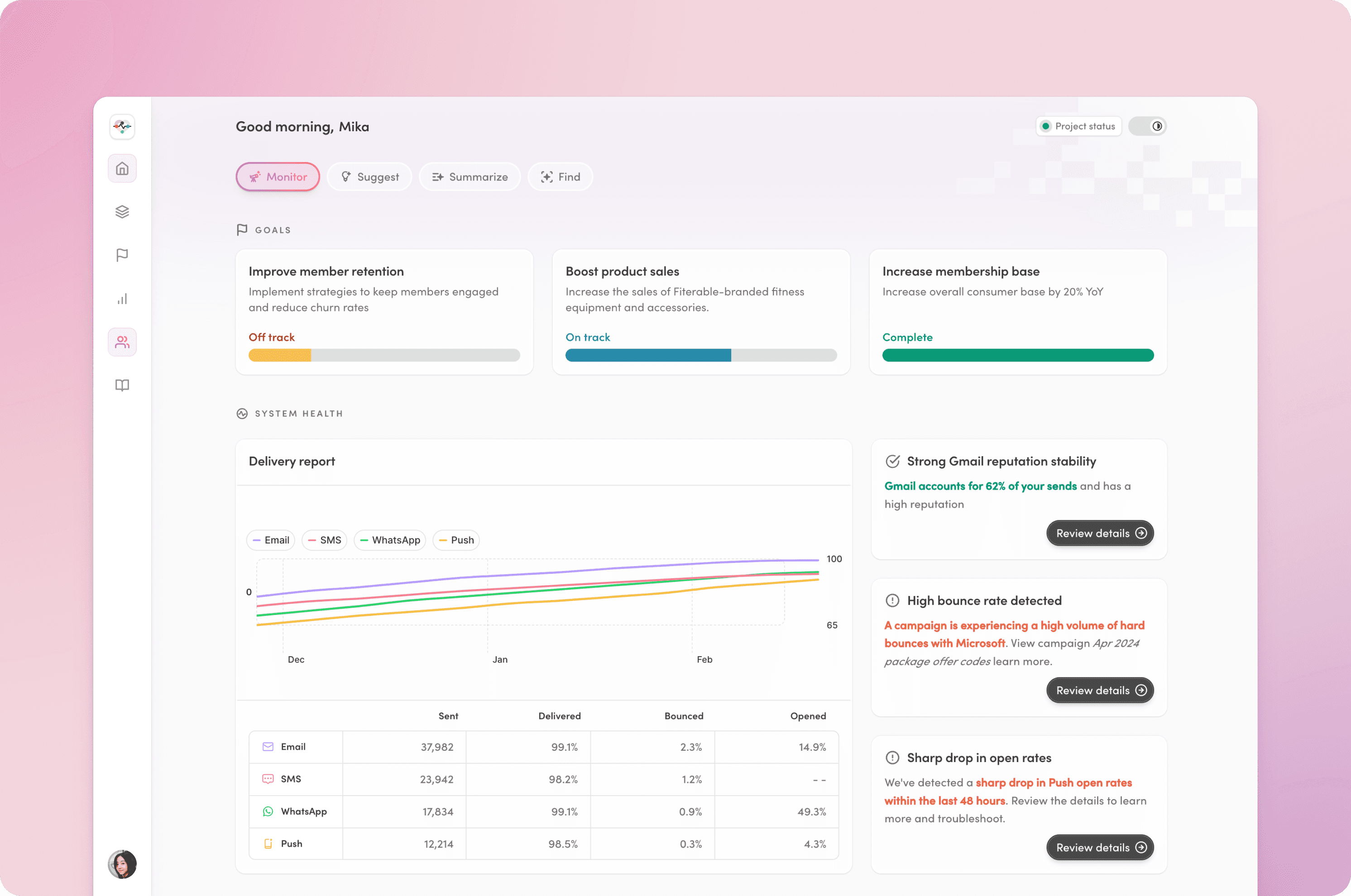
Early explorations began with a context-aware dashboard that tailored to your context and provided observability over your communications
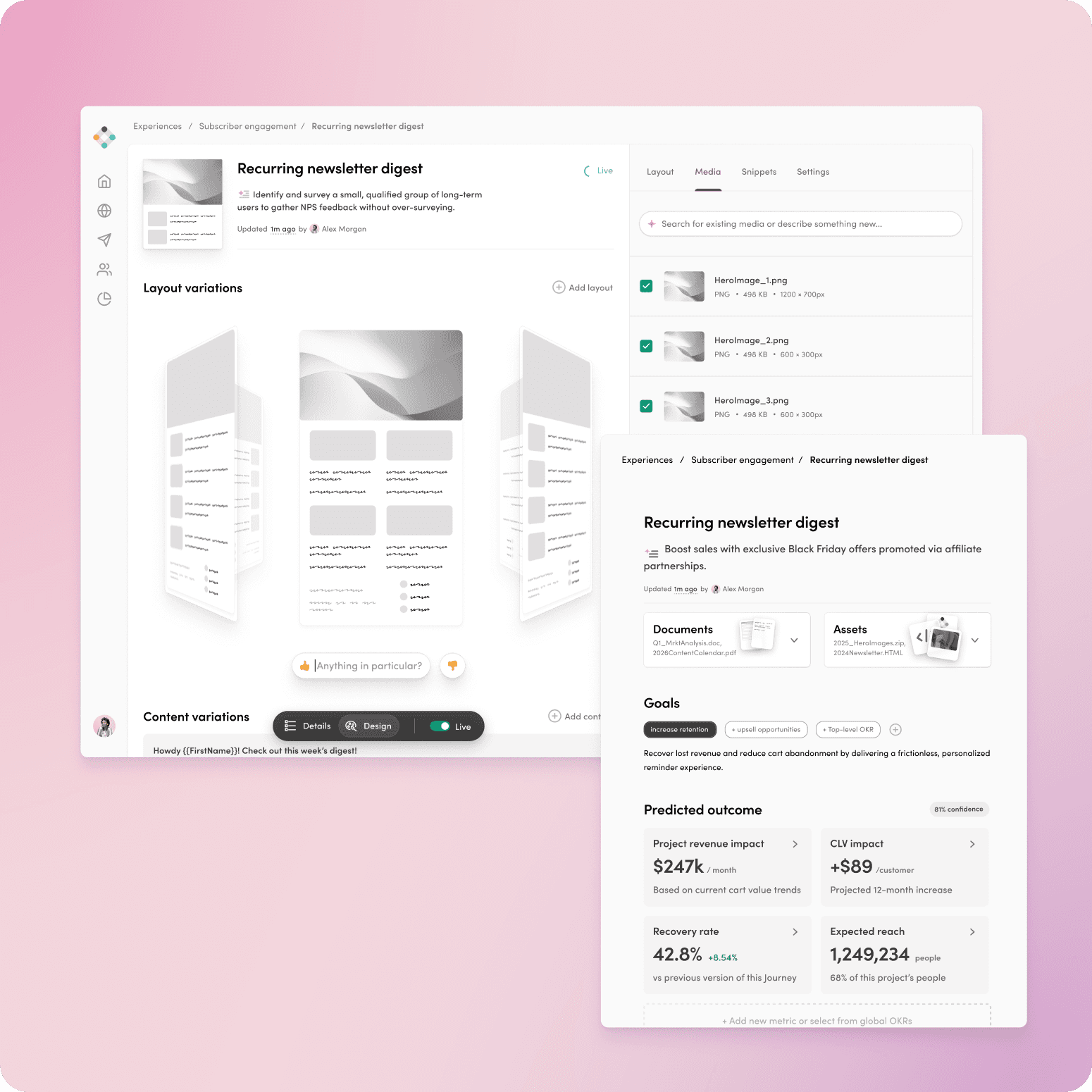
Moving marketer's away from the traditional campaign calendar was a key north star for us, so we started to explore how marketers might be able to create n permutations at scale
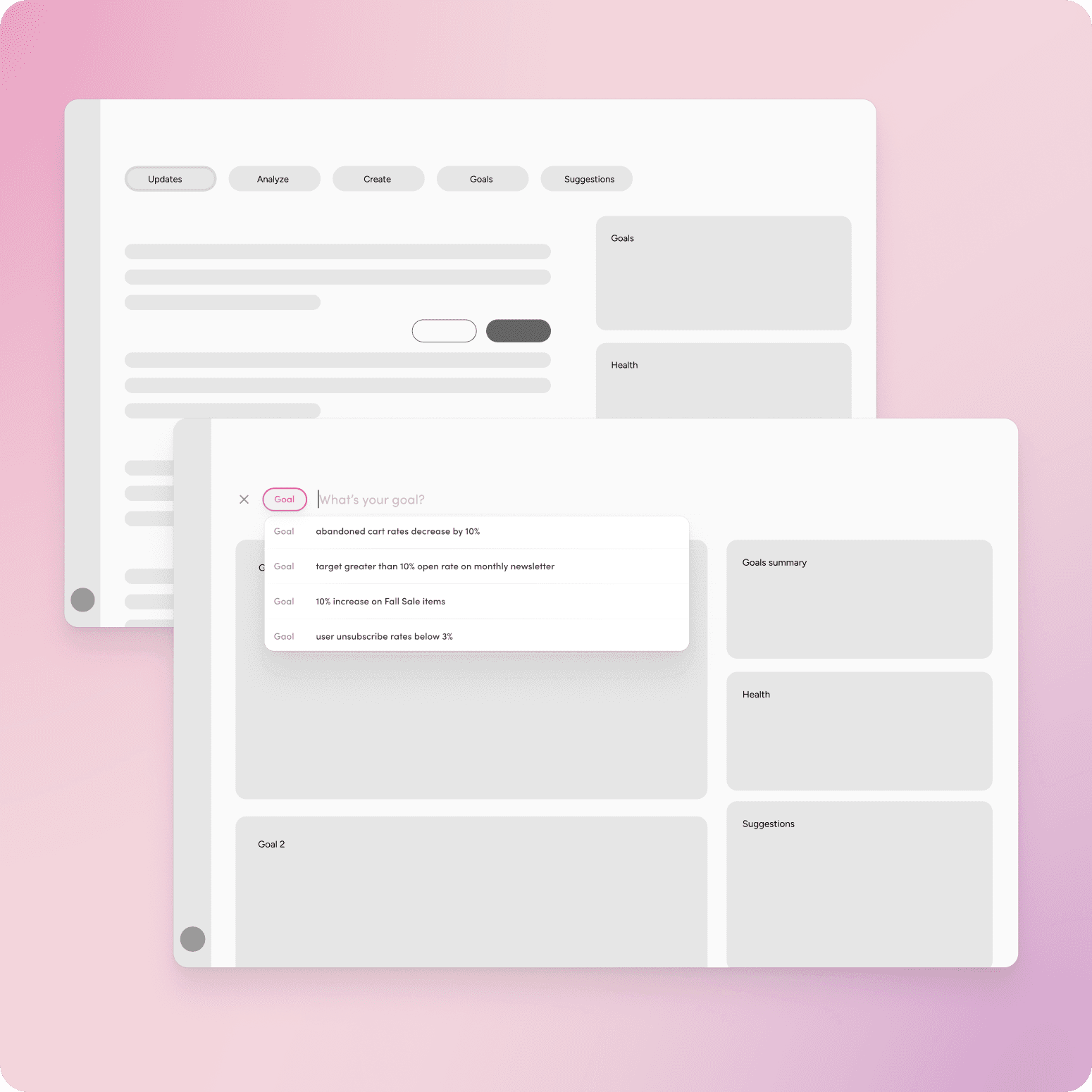
A key design principle defined at the start was making it feel like your coworker—a tight feedback loop in any interaction, with ways to train the model inline when seeing unexpected results.
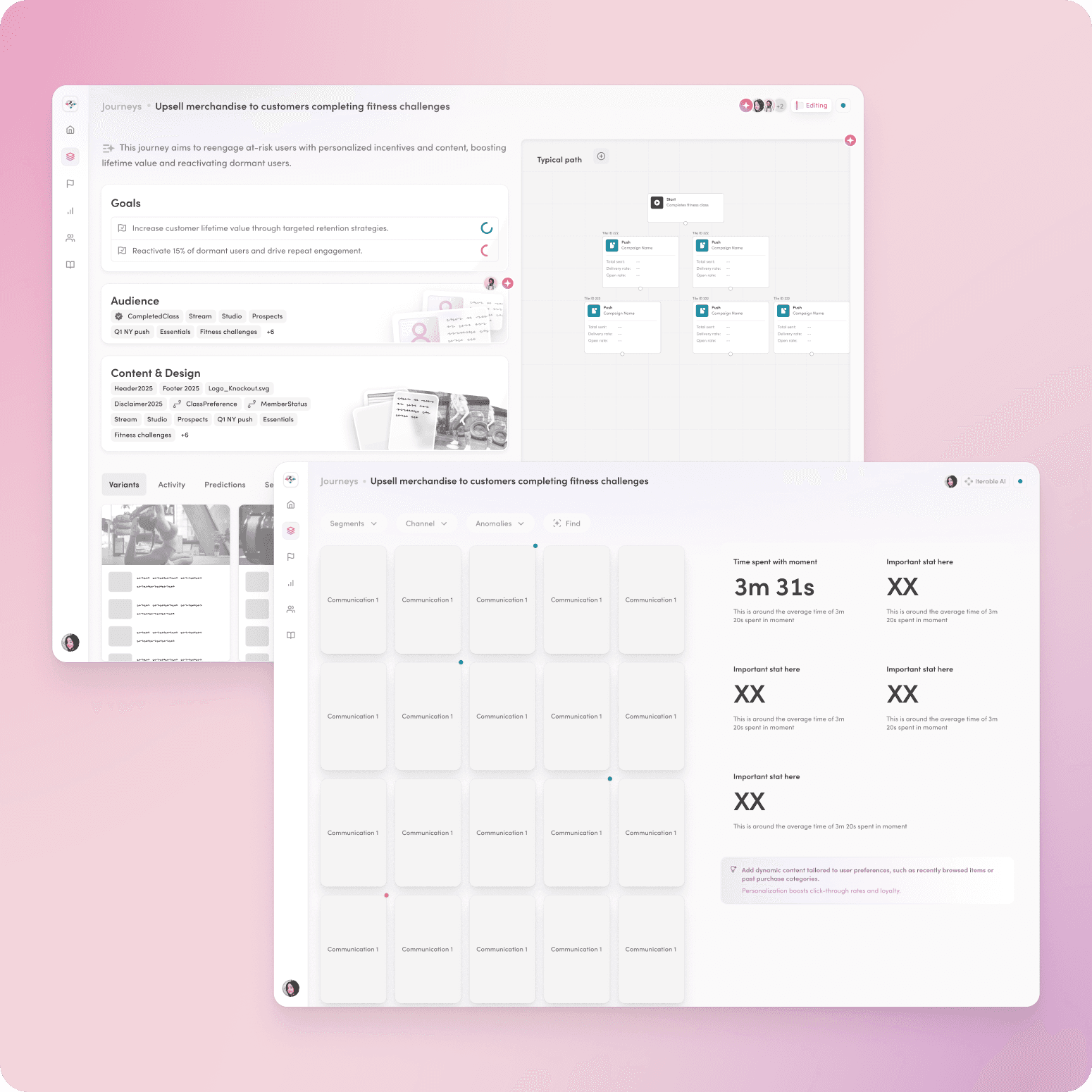
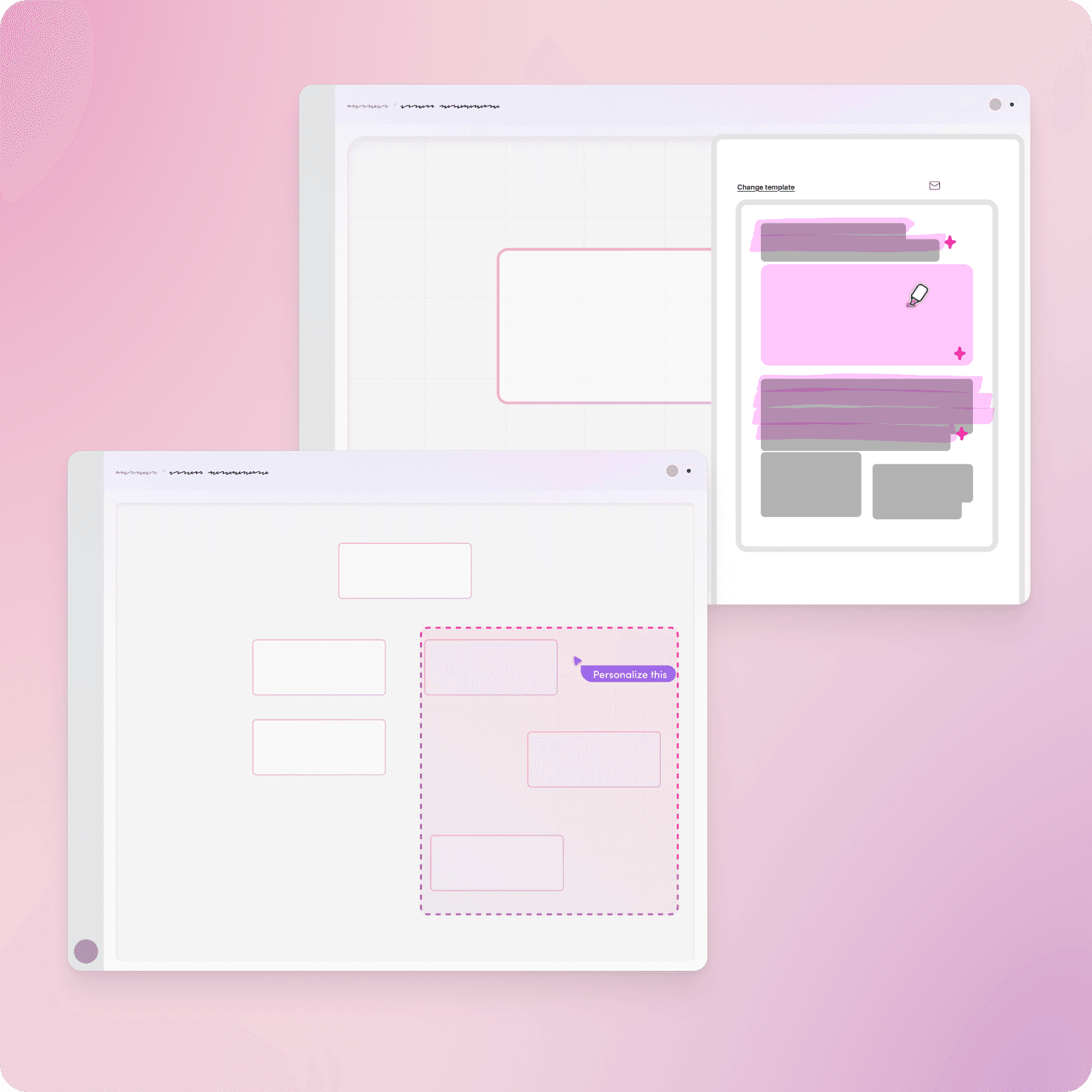
We thought about how the existing Journeys product might evolve and how personalization might work at scale.
Solution
I built the vision prototype in Framer, creating an interactive experience that could communicate the concept to internal teams, the board, and eventually external audiences at Activate Summit.
The prototype needed to do a few things:
Show how Nova would actually feel to use day-to-day (not just describe it abstractly)
Illustrate the shift from campaign management to goal-driven marketing
Be flexible enough to evolve as the vision sharpened through feedback cycles
Work as a communication tool for very different audiences — engineers thinking about feasibility, sales thinking about positioning, leadership thinking about strategy
A hyper-personalized dashboard with a proactive suggestion inbox to help prioritize and take action.
Much of the strategy happens outside of the software we use, but what if Iterable knew what your goals were and continuously optimized towards them?
How do we move away from batch and blast messaging and the dreaded campaign calendar, and make every customer feel like the only customer through send-time personalization that's tailored to a goal?
Iterable AI works is a marketer's companion for last-minute requests for leadership updates.
Results & Impact
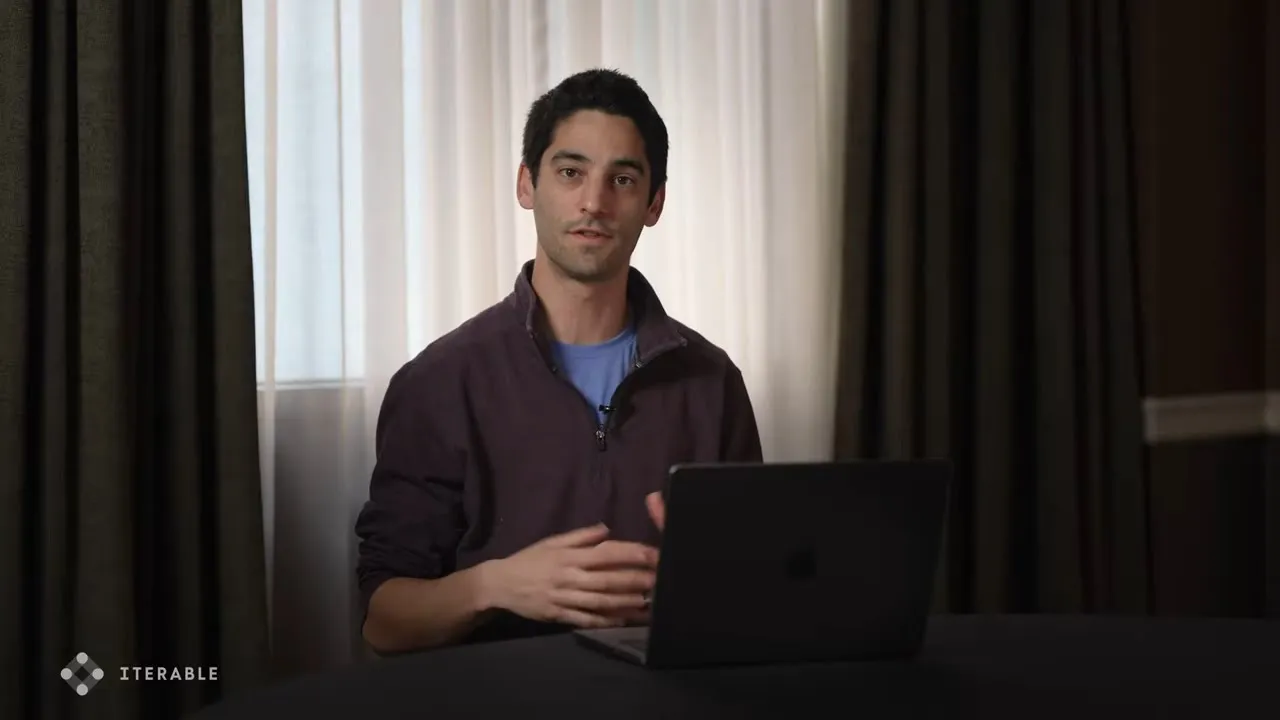
Nova was announced publicly at Activate Summit in April 2025 and has become central to Iterable's product positioning and roadmap.
The prototype I built served as the foundation for:
Internal alignment across product, engineering, and go-to-market teams on what "AI at Iterable" actually means
External communication at the company's largest annual event
A multi-year product roadmap that engineering teams are now building toward
Beyond the immediate deliverables, this project helped establish a vision-prototyping approach for how Iterable tackles big strategic bets — starting with a tangible experience rather than abstract strategy decks.
More resources on Iterable Nova:
What worked well:
The tight feedback loop with leadership forced clarity. When you're presenting to the CEO every week, you learn quickly what's landing and what isn't.
Building in Framer let me move fast and show rather than tell. Interactive prototypes communicate vision better than any deck.
Pairing with research kept the work grounded. It's easy for vision projects to drift into fantasy; having real customer insights as a foundation helped us design something that could actually matter to marketers.
What I'd think about differently:
Vision work is inherently messy — the "right" answer changes as you explore. I got better at holding ideas loosely and treating the prototype as a thinking tool rather than a final artifact.
Exec alignment doesn't mean everyone agrees. Part of the job is making the disagreements productive and finding the synthesis that moves things forward.
Credits
Role: Principal Product Designer
Collaborators: Principal Researcher, VP of Design, with direct input from CEO, CMO, and CPO
Timeline: Nov 2024 – Mar 2025
Tools: Framer, Figma